Mathematics of Steinmetz
The mathematics section preserves original equations, historical notation, modern notation, derivations, worked examples, and physical meaning.
Mathematics At A Glance
Section titled “Mathematics At A Glance”Formula candidates
Source-routed OCR/PDF-text candidates awaiting scan and notation review.Reviewable relations
Relations with enough structure to be sorted into mathematical families.Strong formula candidates
High-priority mathematical strings for transcription, variable mapping, and derivation work.Equation families
AC symbolic method, impedance, transients, waves, apparatus, energy, magnetism, and engineering math.Seeded Equation Pages
Section titled “Seeded Equation Pages”- First Canonical Equation Set
- Equation Atlas
- Source Formula Maps
- Velocity, Frequency, and Wavelength
- Symbolic Rectangular Components
- Symbolic Operator j
- Inductive and Condensive Reactance
- Impedance and Reactance
- Admittance, Conductance, Susceptance
- Power Factor and Effective Resistance
- Capacity Susceptance
- Steinmetz Hysteresis Law
- Permanent Term and Transient Term
- RLC Oscillation Frequency and Damping
- Condenser Oscillation Frequency and Decrement
- Synchronizing Power in the Commonwealth Edison Report
Canonical Equation Data
Section titled “Canonical Equation Data”The archive now has two mathematical layers:
processed/canonical_equations.jsonpreserves the first small promoted equation seed set.processed/equation_atlas.jsonexposes the full source-routed candidate formula layer for review.processed/crosslinked_research_surfaces.jsonlinks formula families back into source-level visual maps and concept pages.
The first promoted equation set is stored as:
processed/canonical_equations.jsonThis file is a review-control artifact. It records source location, modern notation, public page link, and current verification status for the first twelve equations.
The generated equation atlas currently routes 3,845 equation and formula candidates from 15 processed sources into families such as symbolic AC, impedance/admittance, transients, waves/radiation, magnetism/hysteresis, power/energy, engineering mathematics, and apparatus systems. It is intentionally labeled as OCR/PDF-text candidate material until each formula is scan-verified.
The source formula maps split that same mathematical layer book by book. Use them when the question is not “what family does this formula belong to?” but “what math has this source contributed so far, and where do I read it beside the diagrams and source text?”
Working Mathematical Strands
Section titled “Working Mathematical Strands”Radiation Scale
The first source uses velocity, frequency, and wavelength to place electric waves, visible light, ultraviolet, and X-rays on one continuous scale. The archive keeps Steinmetz’s historical notation visible, then translates the relation into modern SI units.
Symbolic Alternating-Current Method
The AC sources move from time-varying quantities into symbolic calculation. The first promoted equation pages now cover rectangular components, impedance, reactance, admittance, conductance, and susceptance.
Hysteresis and Core Loss
The AC and engineering-mathematics sources give the empirical 1.6-power law that made magnetic hysteresis loss calculable. The archive now keeps this as a candidate equation page until exact source units are verified.
Transients and Natural Terms
The transient books require a separate mathematical layer: permanent terms, transient terms, exponential decay, condenser charge, oscillatory discharge, decrement, line reflections, and distributed constants.
Synchronous System Stability
The Commonwealth Edison report adds a practical appendix on station sections out of phase or out of frequency, connecting impedance, reactance, synchronizing current, power exchange, and critical slip.
Visual Mathematical Guides
Section titled “Visual Mathematical Guides”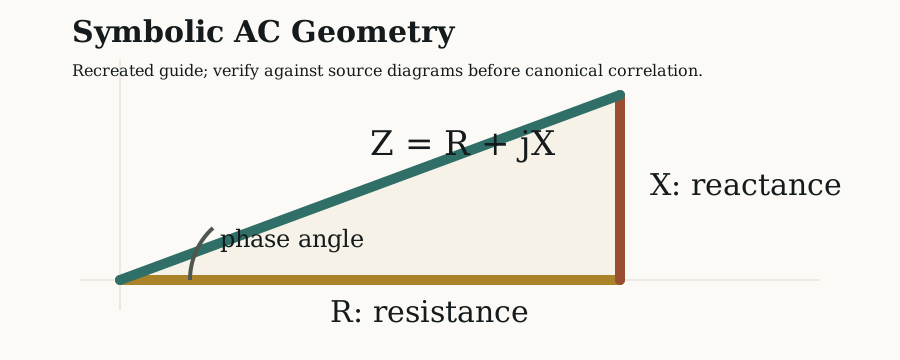
Resistance, reactance, impedance magnitude, and phase angle.
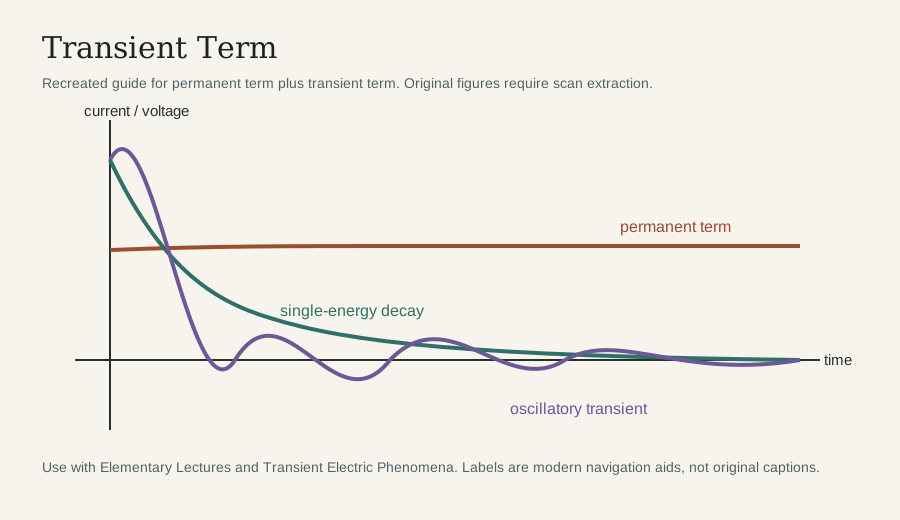
Permanent term, natural term, damping, and oscillatory exchange.
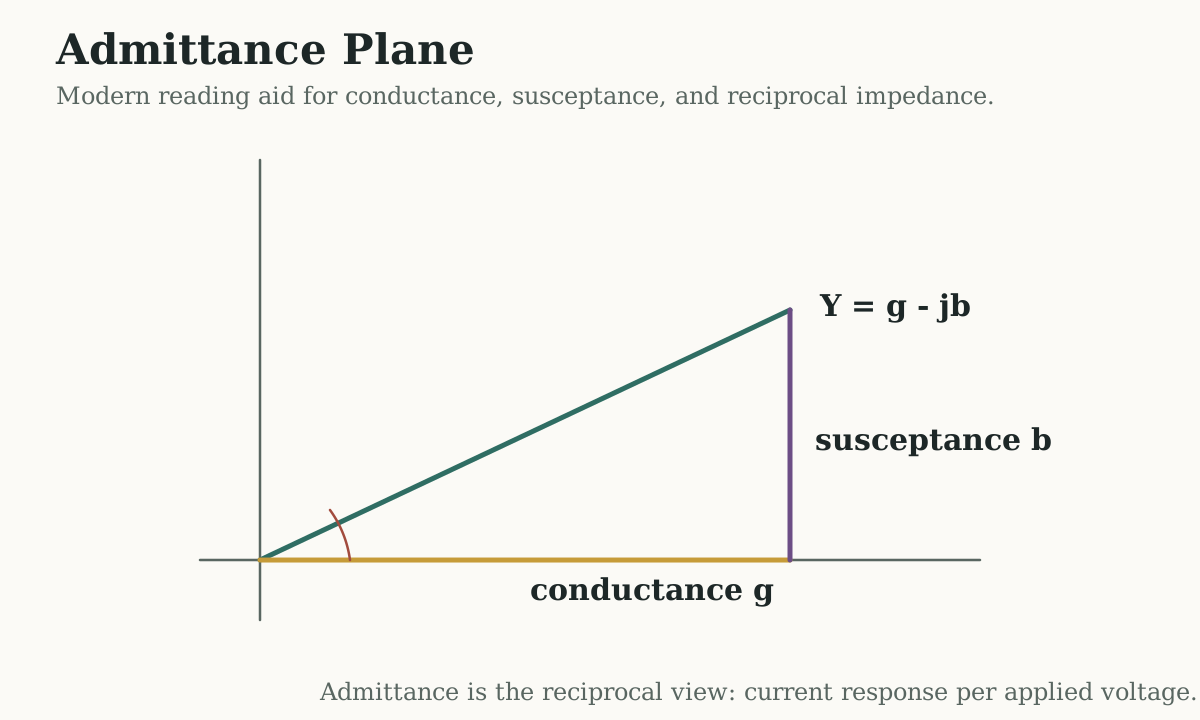
Conductance, susceptance, reciprocal impedance, and symbolic AC calculation.
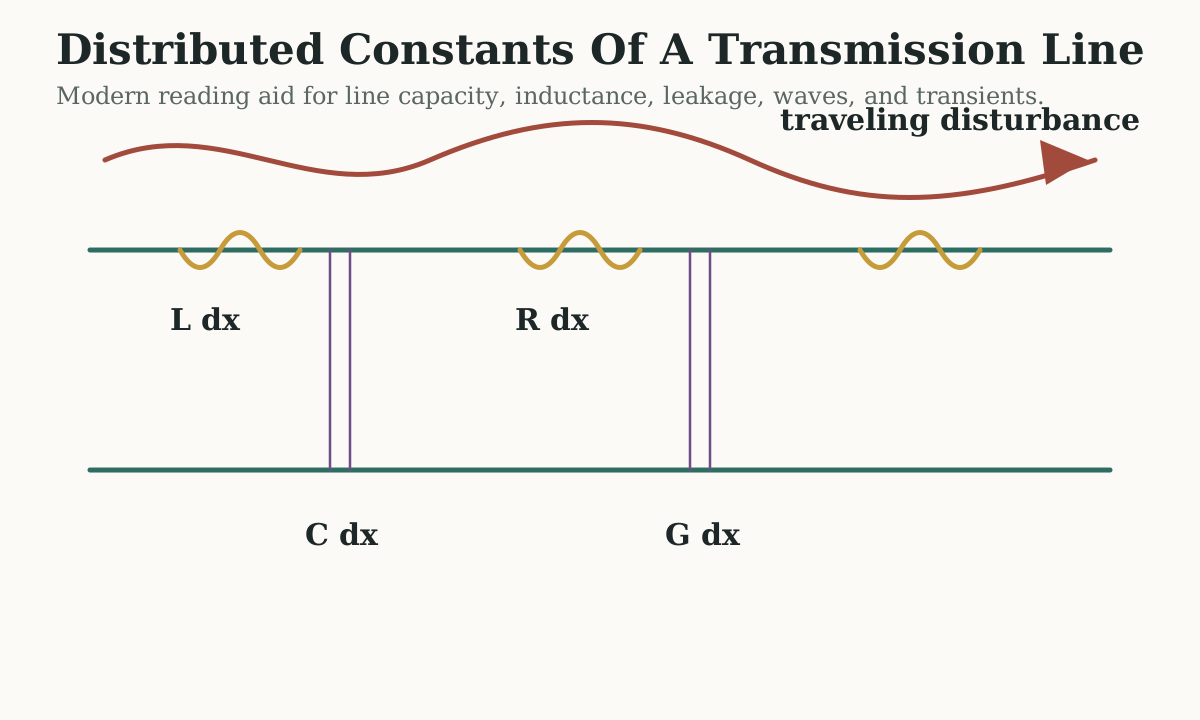
Line inductance, capacity, leakage, resistance, and traveling disturbances.
Candidate Catalogs
Section titled “Candidate Catalogs”The first OCR pass produced candidate equations in:
processed/radiation-light-and-illumination/equations.jsonprocessed/elementary-lectures-electric-discharges-waves-impulses/equations.jsonprocessed/engineering-mathematics/equations.jsonprocessed/theory-calculation-alternating-current-phenomena/equations.jsonprocessed/theory-calculation-transient-electric-phenomena-oscillations/equations.jsonprocessed/commonwealth-edison-generating-system-trouble/equations.jsonThose candidates require scan verification before becoming canonical.
The broader generated atlas is the next working surface: